Reflections from the 47th Annual NAJIT Conference in Atlanta
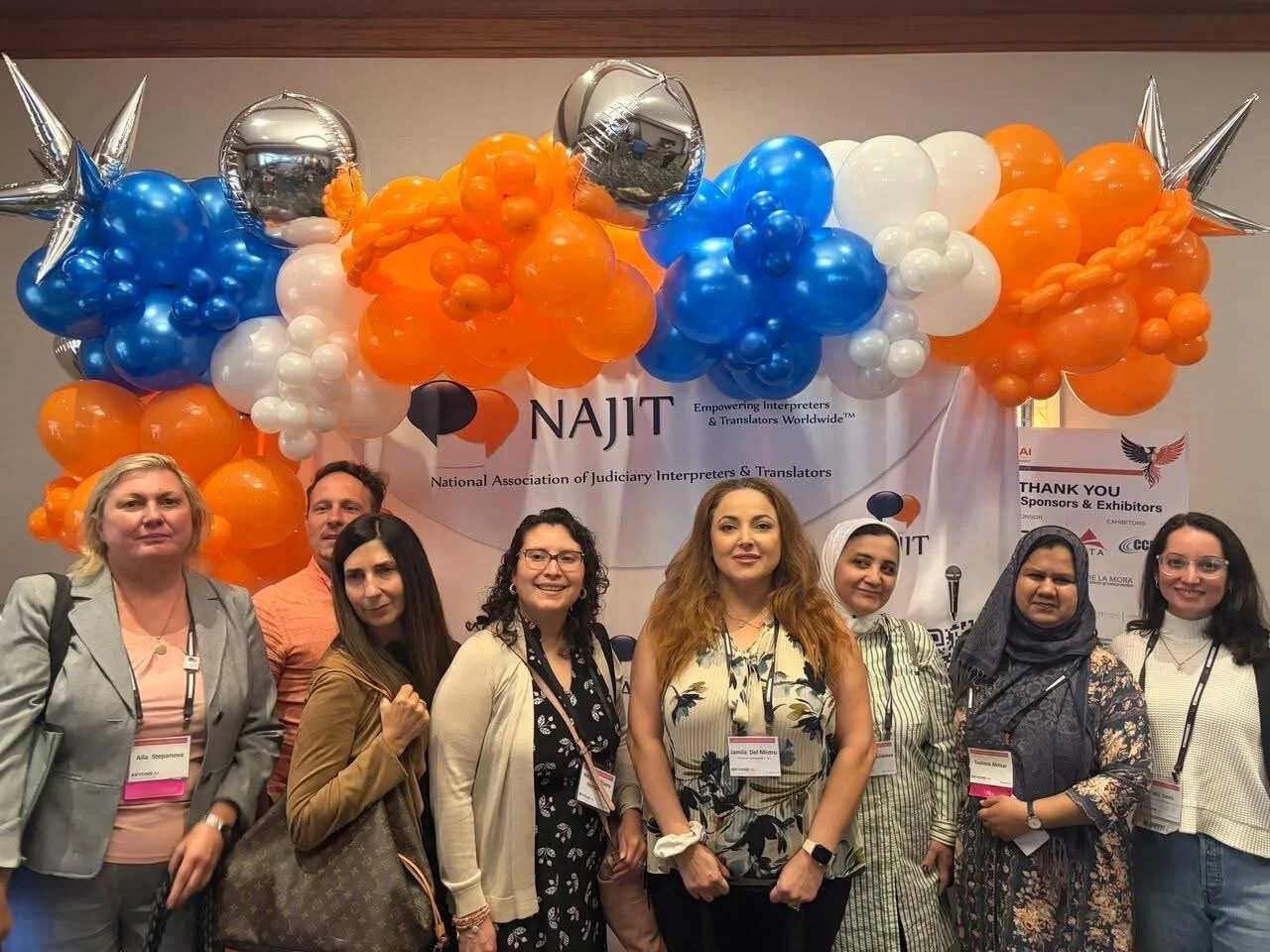
Jamila Del Mistro*
I recently had the privilege of attending the 47th Annual Conference of the National Association of Judiciary Interpreters and Translators (NAJIT) in Atlanta, Georgia. The conference brought together more than 350 language professionals from across the United States and other countries. It was a valuable opportunity for learning, professional development, networking, and important discussions about the future of our profession.
As interpreters and translators, we often work behind the scenes in courts, legal settings, healthcare, education, and government services. Our work is essential for communication and access, but it is often done alone. NAJIT conferences are important because they allow us to come together as a professional community, share experiences, and learn from each other.
Artificial Intelligence: A Key Topic
One of the main topics at the conference was artificial intelligence and its impact on interpreting and translation. Presenters discussed both the advantages and limitations of AI in language services, and how it is already changing our profession.
The discussions also highlighted the risks of relying on it in place of professional interpreters in legal settings where accuracy, confidentiality, meaningful language access, and ethical decision-making are essential.
A key takeaway was that while AI can generate translations and interpretation, it cannot be held accountable for mistakes. This reinforces the continued need for qualified human language professionals in high-stakes environments.
Another important concern raised during the discussions is that AI does not ask clarifying questions when meaning is unclear. In interpreting practice, asking for clarification is an essential ethical requirement to ensure accuracy and completeness. Since AI cannot request clarification in the same way as a human interpreter, there is a risk that meaning may be misunderstood or partially lost. This limitation highlights an important ethical issue, since interpreters are required to render messages accurately and completely, and to seek clarification when necessary to avoid errors in communication.
A strong message also came from Agustín de la Mora, who reminded us that AI is not a future issue anymore—it is already here. He emphasized that interpreters who do not learn how to use AI tools may not be replaced by AI itself, but by other professionals who know how to use these tools effectively.
At the same time, many sessions made it clear that AI cannot replace human interpreters. In legal and other important settings, accuracy, cultural understanding, ethical judgment, and clear communication are still essential. The future of our profession depends on combining strong language skills with responsible use of technology.
Advocacy and Ethics
Another important topic was professional advocacy. Speakers discussed efforts to improve language access, working conditions, and professional standards. Organizations such as NAJIT, the American Translators Association (ATA), and local groups like ATISDA play an important role in supporting interpreters and translators.
Ethics was also discussed in many sessions. Speakers reminded us that confidentiality, accuracy, neutrality, and professional behavior are always important. Even with new technology, ethics remains the foundation of trust in our profession.
Learning from Professionals in the Field
The conference included presentations from experienced educators and practitioners. Topics included ethics, federal court interpreting, and the use of AI in language services. I also attended a presentation by Gulnara Shigabutdinova, whose work shows the growth of new voices in interpreter education.
It was encouraging to see both experienced and new professionals sharing knowledge and supporting the development of our field.
The Value of Professional Community
Some of the most valuable moments were not only in the formal sessions, but also in conversations during breaks and networking events. Meeting colleagues from different states and backgrounds gave new perspectives and practical ideas.
Even with the challenges in our profession, there was a strong feeling of support, collaboration, and shared purpose.
Bringing Ideas Back to ATISDA
As President of ATISDA, I returned from Atlanta with new ideas for supporting our members. The conference reminded me of the importance of mentorship, continuing education, and professional collaboration.
These are values we continue to promote through ATISDA’s programs and activities.
Looking Ahead
I want to thank NAJIT organizers, presenters, sponsors, volunteers, and all participants for an inspiring conference.
Our profession continues to change, but the need for accurate and ethical communication remains the same. By continuing to learn, adapting to new tools, and supporting each other, we strengthen both our profession and the communities we serve.
Jamila Del Mistro is a licensed court interpreter in the United States working in the following language combinations: Russian–English, Azerbaijani–English, and Turkish–English, and vice versa. Jamila currently serves as the president of ATISDA.